A basement wall that looks fine on installation day and starts curling, bubbling, or flaking within a year is not a paint problem. It is a moisture problem wearing a paint-colored disguise, and understanding that distinction is the single most useful thing a homeowner can learn before opening another can.
Basement Paint Peeling Atlanta: The Practical Answer
Metro Atlanta sits on Piedmont clay and rolling terrain, which means many homes, particularly older properties in neighborhoods like Decatur, Dunwoody, and parts of Sandy Springs, were built with full or partial basements cut into a slope. Some are finished living space; many are still bare block or poured concrete used for storage and mechanical equipment. Both types can develop peeling paint, but the underlying cause and the correct fix are rarely identical from one house to the next.
Before any coating decision, the wall needs an honest inspection. That inspection should separate cosmetic peeling from an active water intrusion problem, because painting over the second one only delays a more expensive repair. When the substrate itself needs attention beyond paint, our drywall repair services in Atlanta can address damaged finished-basement walls once the moisture source is under control.
Why Basement Walls Behave Differently From Any Other Surface in the House
Every other painted surface in a home sits above grade, surrounded by air on both sides. A basement wall is different: one face touches conditioned room air, and the other is often in direct contact with soil that never fully dries out, especially in Georgia's humid subtropical climate. That soil-facing side is under constant pressure to push moisture through the material toward the drier interior side, a process that continues quietly whether or not anyone notices it.
Below-grade concrete behaves like a wick
Concrete and concrete masonry units are porous. Water molecules move through the microscopic capillary network inside the material by capillary action, much like a paper towel draws water upward. When that moisture reaches the painted interior face and cannot escape through the coating, it collects just beneath the paint film. Pressure builds, adhesion fails, and the paint lifts, bubbles, or sheets off in flakes. This is why a basement can smell slightly musty and still look bone dry on the surface right up until the paint gives way.
Reading the Signs Before You Reach for a Roller
Not every white residue or peeling patch means the same thing, and treating them identically wastes money. A few minutes of close inspection, ideally with a flashlight held at a low angle to reveal texture, tells you which category of problem you are actually facing.
Basement paint peeling vs. efflorescence vs. chalking
- Peeling or flaking paint lifts in sheets or curls at the edges, often revealing bare concrete or a chalky white layer underneath. This is the clearest sign that moisture pressure has broken the bond between coating and substrate.
- Efflorescence is a white, crystalline, salt-like deposit that forms as water carries dissolved minerals to the surface and evaporates, leaving the minerals behind. It brushes off relatively easily but returns if the water source is not addressed.
- Chalking is a fine, powdery residue that transfers onto your hand when you touch the wall. It is common on older masonry paints as they age and break down under UV or moisture exposure, and it needs to be removed before any new coat is applied.
Dark, fuzzy, or slimy growth is a different category entirely and should be treated as active mold or mildew rather than a paint defect. The U.S. Environmental Protection Agency's guide to mold and moisture notes that controlling moisture is the key step in preventing and addressing mold growth, which lines up directly with what a basement wall needs before repainting.
What Actually Causes Basement Paint Peeling in Atlanta Homes
Most calls we receive about a basement paint failure trace back to one of a handful of root causes, and more than one is often present at the same time.
Georgia's clay soil and hydrostatic pressure
Metro Atlanta's dense red clay drains slowly compared to sandier soils. After heavy rain, clay can stay saturated for days, and that saturated soil presses laterally against foundation walls. This lateral pressure, called hydrostatic pressure, forces water through hairline cracks, porous block cores, and even sound-looking concrete. A wall that never shows a visible crack can still be under enough pressure to drive vapor through the material and fail a coating from behind.
Grading, gutters, and downspouts
The single most common contributor we find on-site is water management at grade. Downspouts that dump within a few feet of the foundation, gutters that overflow during a Georgia thunderstorm, and yards that slope toward the house instead of away from it all funnel water directly to the basement wall. No interior paint product is engineered to out-perform that volume of water arriving at the same spot year after year.
Condensation from indoor humidity
In summer, warm, humid outdoor air entering a basement through an open window or unsealed gap can condense on the cooler concrete surface, since below-grade walls stay closer to soil temperature. That condensation looks identical to a leak at first glance but has a completely different fix: ventilation and dehumidification rather than exterior drainage work.
Not sure which cause applies to your basement?
Our team can inspect the wall, the grading, and the coating history together before recommending a fix.
Request a Free Estimate Call 770-847-2468A Simple Test Before You Buy a Single Gallon of Paint
Tape an 18-by-18-inch sheet of clear plastic to the wall, sealing all four edges completely, and leave it for 24 to 48 hours. If condensation forms on the room-facing side of the plastic, humidity in the air is the culprit. If moisture appears on the wall side, underneath the plastic, water is moving through the concrete itself, and the fix needs to start outside, not inside. This ten-minute test prevents homeowners from buying an expensive waterproofing paint that was never going to solve a condensation problem, or from running a dehumidifier that will never fix a hydrostatic pressure issue.
Why the Wrong Paint Guarantees a Repeat Failure
Latex wall paint vs. masonry and waterproofing coatings
Standard interior latex wall paint is formulated for drywall in a climate-controlled room, not for a porous, below-grade masonry surface under constant vapor pressure. It lacks the elastomeric flexibility and the specific film density that basement-rated products are built with. Dedicated masonry waterproofing paints, such as cementitious coatings from manufacturers like DRYLOK, are designed to fill the pores of concrete and block and resist measurable hydrostatic pressure rather than simply sitting on the surface as a decorative film.
That said, waterproofing paint is not a substitute for exterior drainage correction on a wall with a significant hydrostatic pressure problem. Manufacturer technical data sheets specify a pressure rating for a reason, and a wall receiving more water than the coating is rated to resist will eventually fail regardless of how carefully it was applied.
Fix the Water Path Before You Fix the Wall
Correcting drainage is almost always less expensive than repeatedly repainting a failing wall, and it is the step most often skipped because it happens outside, out of sight from the finished space.
- Extend downspouts so discharge lands at least four to six feet from the foundation, ideally further on a sloped lot.
- Regrade soil near the foundation so it slopes away from the house rather than toward it, even a modest one-inch-per-foot pitch makes a measurable difference.
- Clean gutters on a regular schedule so summer storms do not overflow directly down the foundation wall.
- Check window wells for proper covers and drainage so they do not act as a collection basin during heavy rain.
- Consider a French drain or sump pump for chronic hydrostatic pressure that surface grading alone cannot resolve.
These corrections are typically outside a painting contractor's scope, but they should be completed, or at least well underway, before a final coating decision is made.
Preparing a Basement Wall That Has Already Failed Once
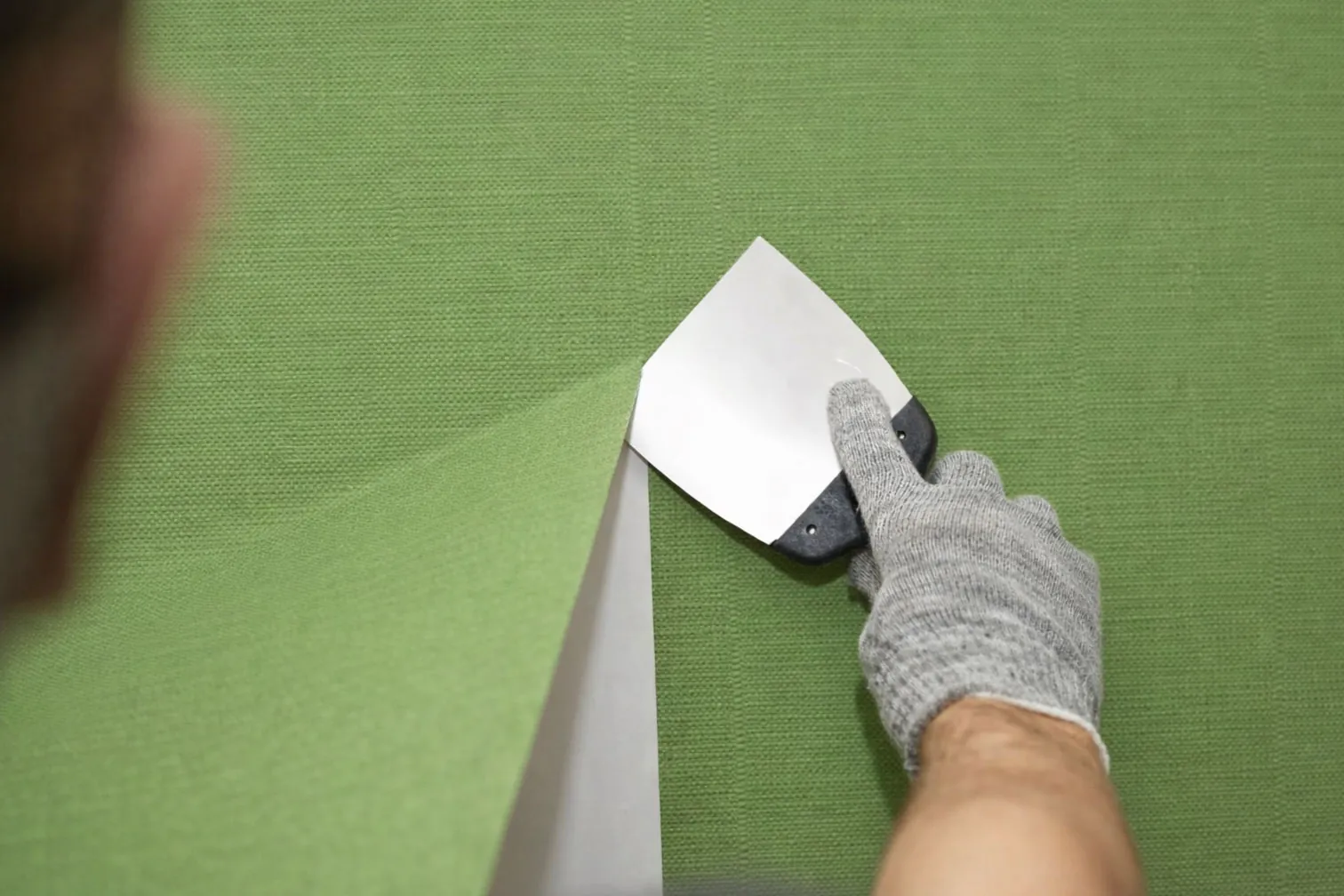
A wall with existing peeling paint cannot simply be recoated on top of the failure. Every loose flake left in place becomes a weak point that telegraphs through the new coat and fails again within months.
Remove, don't cover
Scrape and wire-brush all loose or flaking material down to sound substrate. Efflorescence should be dry-brushed off rather than washed, since introducing more water can temporarily dissolve the salts back into the surface. Stubborn mineral buildup sometimes requires a diluted muriatic acid wash, handled with appropriate ventilation, eye protection, and neutralization afterward; this step is not one to improvise without proper safety knowledge.
Once the surface is clean and dry, any active efflorescence source should be resolved, and the wall should sit through at least one dry stretch to confirm the moisture problem has actually stopped before new paint goes on. Rushing this step is the most common reason a "professional-looking" basement repaint fails again within a year.
Building the Right Coating System for Concrete and Block
A durable basement finish is a system, not a single product. On bare masonry, that system typically includes a masonry conditioner or block filler to even out porosity, followed by a cementitious or elastomeric waterproofing coating rated for the hydrostatic pressure the wall may encounter, applied in the number of coats the manufacturer specifies rather than a single thin pass. Breathability also matters: a coating that is too impermeable on the wrong wall can trap vapor at a different layer of the assembly, so product selection should match the specific wall type, block, poured concrete, or parged masonry, rather than being chosen by color alone.
Color and sheen still matter for the finished look. Lighter colors make a basement feel less confined, while a satin sheen offers a practical balance of washability and glare control for a space that often doubles as storage, laundry, or a home gym.
Get a Coating Recommendation Built for Your Wall
We evaluate substrate type, moisture history, and finish goals before recommending a specific product and application plan.
Explore Basement Painting Call 770-847-2468Finished vs. Unfinished Basements Need Different Strategies
An unfinished basement with exposed block or poured concrete calls for the masonry-specific approach described above, applied directly to the substrate. A finished basement, where drywall has been installed over furring strips or a stud wall, adds another layer of complexity: if peeling shows up on painted drywall rather than bare concrete, the moisture has already passed through or around whatever vapor barrier was originally installed. In that scenario, damaged drywall sections often need to be cut out and replaced rather than simply repainted, since wet paper-faced gypsum board rarely dries back to a paintable condition without leaving a stain or texture problem behind.
Ceilings, Trim, and Adjacent Surfaces in a Basement Repaint
Basement ceilings are frequently exposed joists, painted drywall, or in older finished spaces, a textured popcorn finish installed decades ago. Moisture problems on walls can also affect ceiling paint near the top of the wall line, so it is worth inspecting that transition during the same visit. If a dated textured ceiling is part of the scope, our popcorn ceiling removal service can modernize the space at the same time repairs and repainting happen, rather than treating it as a separate project down the road.
Common Mistakes That Make Basement Paint Peeling Worse
Sealing the interior before the exterior is dry
Applying a heavy-duty waterproofing paint to the inside face of a wall that is still actively wet from outside can trap moisture within the concrete itself. Over time that trapped moisture can contribute to spalling, where the surface of the concrete flakes away in chunks rather than the paint alone peeling. Confirming the wall is genuinely dry, not just dry-looking, protects the masonry as well as the finish.
Pressure washing bare concrete right before painting
Pressure washing can be useful for removing loose debris, but soaking a porous wall immediately before applying a moisture-sensitive coating works against the goal. The wall needs real drying time, often several dry days at minimum, before a new coating goes on.
Ignoring a small patch because it is out of sight
A section of peeling paint behind stored boxes or a furnace is easy to overlook, but the same moisture pathway causing it will not stay contained forever. Small, hidden failures are the cheapest to correct and the easiest to ignore, which is exactly why they tend to spread the most before anyone notices.
Choosing a coating by price instead of by wall type
Basic masonry paint and a true hydrostatic-pressure-rated waterproofing coating can look similar on a shelf but perform very differently underground. Matching the product to the actual condition of the wall, confirmed with a moisture test rather than a guess, prevents paying twice for the same section of wall.
When Peeling Paint Signals a Bigger Problem Than Paint
Some warning signs are outside the scope of any painting product and deserve a specialist's evaluation before further work continues:
- Visible cracks in the foundation wall wider than a hairline, or cracks that appear to be growing
- Standing water or a visible active leak during or after rain
- Bowing, leaning, or bulging in a foundation wall
- A strong, persistent musty odor that returns quickly after ventilation
- Repeated paint failure in the same location despite prior repairs
Any of these point toward a structural or waterproofing specialist rather than a coating decision, and addressing them first protects the investment in any painting work that follows.
Keeping a Freshly Painted Basement Looking Right
Once a basement wall is properly dried, prepped, and coated with the right system, ongoing maintenance is straightforward. Keep gutters clear and downspouts extended year-round, not just after a problem appears. Run a dehumidifier during Atlanta's humid summer months if the space lacks strong ventilation, and inspect the wall after any unusually heavy storm. Touch-ups are far easier and cheaper than a full recoat, but only if a small issue is caught before it spreads across the wall.

What Our Basement Painting Process Includes
We start with an inspection that looks at the wall, the grading outside, and the coating history, not just the visible paint. From there we define whether the scope is limited to cleaning and recoating, or whether drywall replacement, masonry repair, or a referral to a waterproofing specialist should come first. Explore examples of finished spaces in our project gallery, learn more about our painting company, or confirm coverage on our service areas page.
Ready for a basement that stays finished?
We can inspect your walls, define the real cause, and provide a free, no-obligation estimate.
Get Your Free EstimateFrequently Asked Questions
Why does basement paint peel even when the walls look dry?
Concrete and block can hold moisture that never reaches the surface as visible dampness. Vapor still pushes outward through the wall, and if the paint film cannot breathe or bond to that moisture, it lifts from underneath even though the room feels dry.
Can I just repaint over peeling basement paint?
No. Loose or flaking paint must be removed down to sound material first. Painting directly over failed coating traps the same moisture problem under a new layer and the peeling returns, often faster than before.
Is regular interior wall paint ever acceptable in a basement?
On a finished basement wall with a proven vapor barrier and no history of moisture, standard interior paint over primed drywall can perform well. On bare concrete or block, especially below grade, a dedicated masonry or waterproofing coating is the more reliable choice.
Do I need to fix drainage before painting a basement wall?
If the peeling relates to hydrostatic pressure, grading, or gutter overflow, yes. Coating a wall without correcting the water source treats a symptom, and the same failure typically reappears within one to two seasons.
How can I tell if efflorescence or mold is the problem?
Efflorescence is a white, crusty mineral deposit that dissolves partially in water and does not stain fabric. Mold is typically darker, fuzzy or slimy in texture, and often accompanied by a musty odor. When in doubt, treat any active growth as a moisture issue requiring investigation before painting.
How long should a basement dry out before repainting?
There is no fixed number of days. The wall should pass a plastic-sheet moisture test and show no active dampness, efflorescence regrowth, or musty odor before new coating is applied.

About Impeccable Painting Services
We help Metro Atlanta homeowners solve moisture-related paint failures with proper diagnosis, preparation, and coating systems built for below-grade surfaces, basements, drywall, and specialty repairs included.
Sources: U.S. EPA: A Brief Guide to Mold, Moisture, and Your Home; DRYLOK masonry waterproofing paint systems.